Debunking DiSC Skepticism
Feb 18, 2026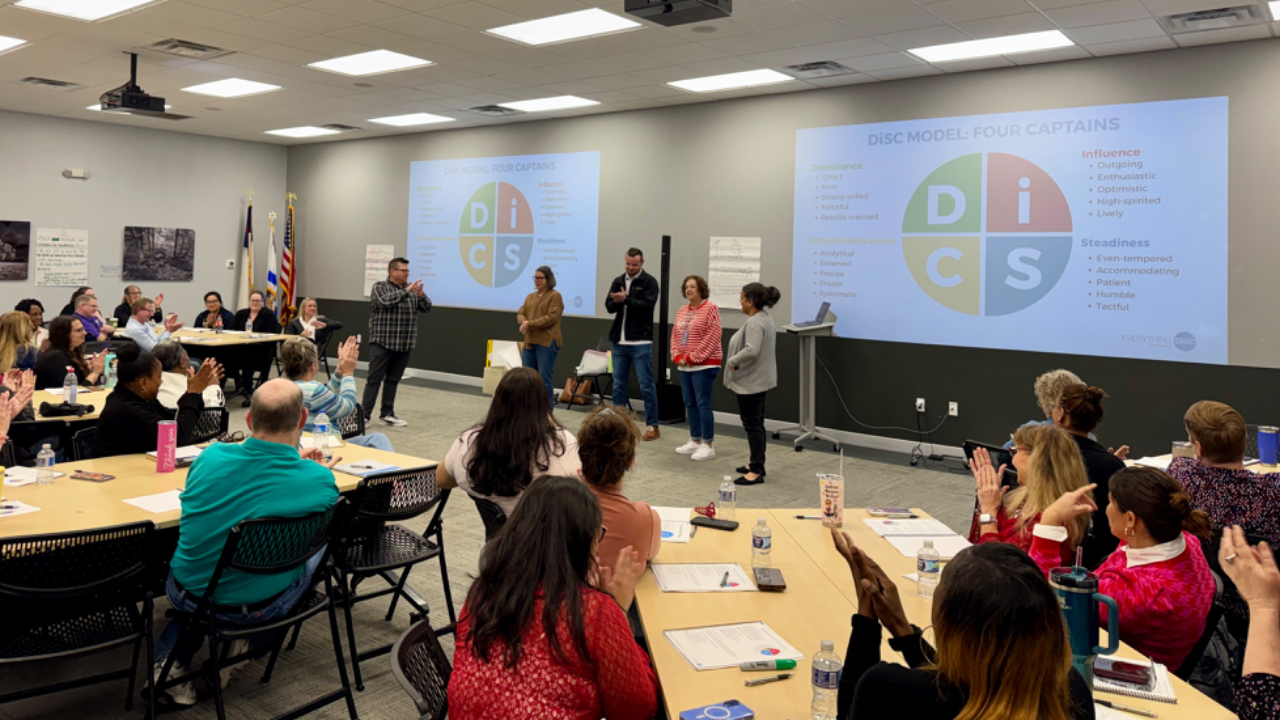
A message from Steve...
In my discussions with my colleagues, I’ve found that many leaders are skeptical of workplace assessments. Not dismissive. Not resistant. Just cautious.
They’ve seen the binders on shelves, the colorful charts, and enthusiastic workshops that generated insight, but not lasting change. And underneath that caution are a few very real concerns:
- We cannot risk this being used for hiring or promotion decisions.
- We don’t want to put people in boxes.
- Four styles? Our people are far more complex than that.
Those concerns are not only understandable, but they’re also responsible. Leaders are right to ask hard questions about any tool that claims to improve communication and collaboration.
That’s exactly why experiences like Everything DiSC, when facilitated with intention and activation, matter so much.
Recently, during our “Everything DiSC Learning Experience”, expertly led by our Director of Curriculum, Chris Friday, and our Director of Programs, Erin Watson, I had the opportunity to observe what happens when those common concerns are addressed head-on. It became clear very quickly that this was not a personality test review. This was a behavioral activation experience.
1. Concern: We cannot risk this being used for hiring or promotion decisions.
From the outset, Chris and Erin established clear “Rules of the Game,” creating a safe learning environment and setting expectations around purpose. This was framed as a development tool, not an evaluative one. Participants understood their results would not be used for hiring, promotion, or ranking. The goal was growth, communication, and adaptability. That clarity removed the fear that often lingers in assessment-based conversations and allowed trust to build in the room.
2. Concern: We do not want to put people in boxes.
One of the most common leadership concerns is the fear of labeling. No organization wants employees walking away saying, “Well, that’s just how I am,” or worse, using a style as justification for unproductive behavior. Instead, participants were invited to reflect deeply on their reports, highlighting what resonated, identifying where they often feel misunderstood, and exploring how their behavior shifts under pressure. The emphasis was on tendencies, not identity. The focus was on flexibility, not fixed traits.
The result? Curiosity rose, laughter surfaced, and people recognized themselves, and each other, without feeling confined.
3. Concern: Oversimplification of Human Dynamics
Another common hesitation is the perception that four behavioral styles oversimplify human complexity. While DiSC’s foundations trace back to the work of William Moulton Marston, the experience demonstrated that simplicity in framework does not mean simplicity in application. Participants explored motivators and stressors, workplace priorities, and how different styles experience feedback, meetings, and conflict.
In small groups organized by style, they articulated what others should know about working with them and where misunderstandings commonly occur. Then the conversation expanded across styles, identifying where collaboration feels natural and where it requires intentional adjustment.
In real time, perspectives broadened and differences were reframed as strengths. What once felt frustrating became understandable. And perhaps most importantly, participants identified small, practical behavioral adjustments they could implement immediately.
This is where Game On activation changes the game.
Many assessment experiences stop at awareness, but this one moved to action. Participants were on their feet, practicing new language. They acknowledged where they felt stressed. They rehearsed how to flex their approach with colleagues who think and communicate differently. Insight was not left on paper; It was translated into behavior.
For leaders who have hesitated to bring assessments into their organizations, the takeaway is this; When facilitated with care, clarity, and activation, these tools do not box people in. They give teams a shared language. They do not oversimplify complexity. They create accessible entry points for understanding it. And when positioned properly, they are never used to evaluate performance - but to elevate it.
The “Everything DiSC Learning Experience” provides teams with deeper self- awareness, greater appreciation for differences, and practical strategies they can apply immediately. And when communication improves, trust strengthens. When trust strengthens, collaboration accelerates. When collaboration accelerates, results follow.
Assessments alone do not transform teams. Activation does.
So yes, as leaders you should continue asking thoughtful questions. You should safeguard against misuse and protect your people from labels.
But we should also recognize that when insight turns into action, when common language replaces assumption, and when behavioral flexibility becomes the goal, assessment becomes more than a report. It becomes a catalyst.
To learn more about how this unique program can be a catalyst for your team/organization, please feel free to contact us.
Assessment On.
Activation On.
DiSC On.
Game On.
Stay connected with news and updates!
Join our mailing list to receive the latest news and updates from our team. Don't worry, your information will not be shared.
We hate spam too. We'll never sell your information, for any reason.